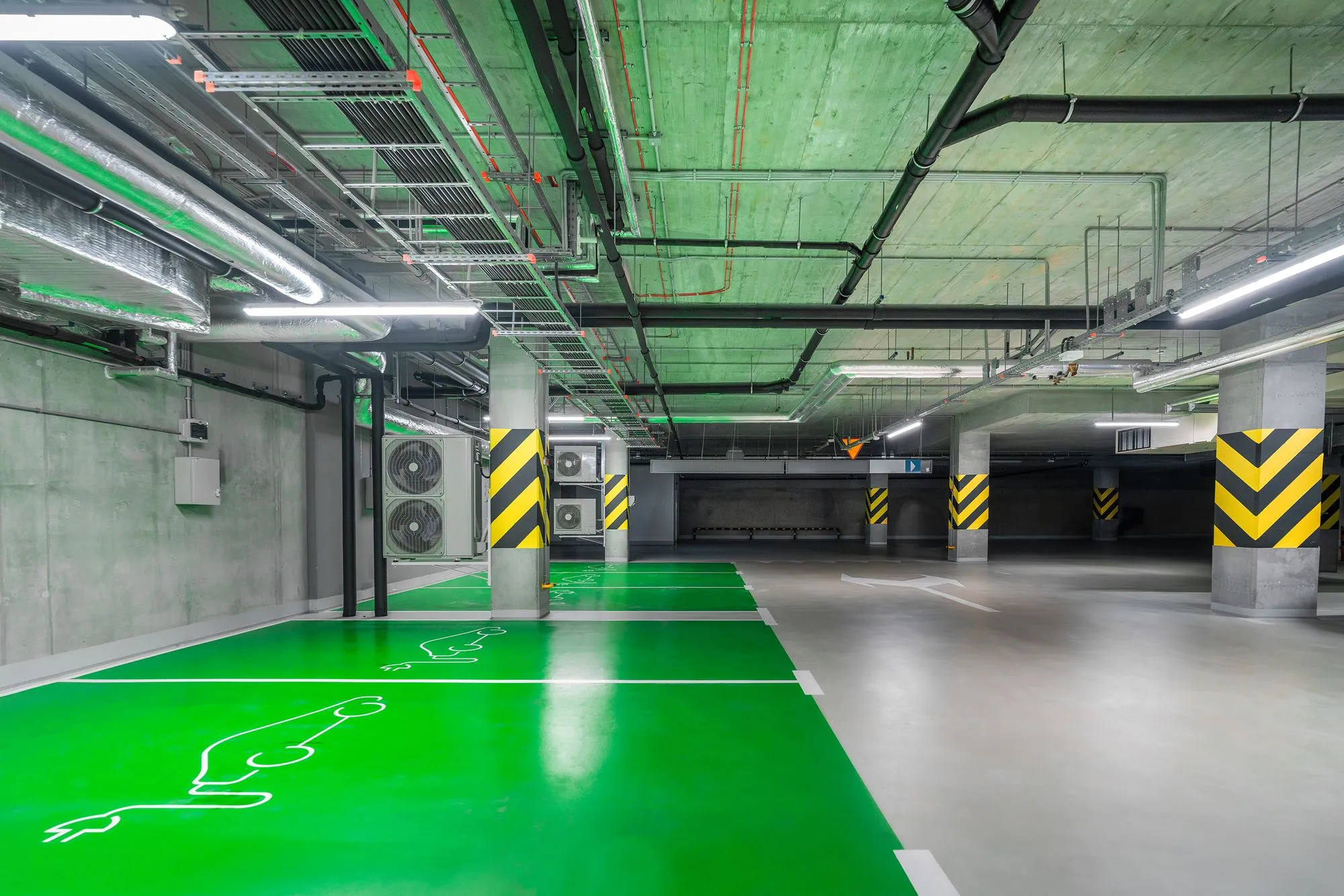
One owner's install or a community-wide program
| One owner's install | Community-wide program | |
|---|---|---|
| Trigger | A single owner request | Board decision after a resident survey |
| Capacity | First come, first served; early installs can block later ones | Sized once and shared fairly |
| Board effort | Repeated for every request | One approval, then a standard process |
| Fits | Few EV drivers and plenty of spare capacity | Growing demand or tight capacity |
Common-area vs deeded or assigned spaces
- Common-area chargers: shared chargers any resident can use, usually networked with usage fees.
- Deeded or assigned spaces: circuits run to individual spaces, often metered to the owner. Conduit may cross common areas, so the board still decides the route.
- Mixed: shared Level 2 for visitors and turnover, Level 1 at assigned spaces.
Who pays: cost-sharing and metering
- Association-funded shared chargers, with costs recovered through usage fees.
- Owner-funded installs, where each owner pays for their own circuit and charger.
- Shared infrastructure, where the association pays for panels and conduit and owners add chargers later.
Electricity is billed through a network, a submeter or the owner's own meter. Your CC&Rs and counsel shape which model works. See cost and ROI for what drives the budget.
High-rise vs garden-style communities
High-rise and podium buildings usually have one main service and a garage. Runs are long, and fire separations and garage ventilation affect conduit routes. Load management matters most here.
Garden-style communities often have several smaller services, carports and surface lots. Trenching and the distance from each panel to parking drive the work.
A board process
- Survey residents on current and planned EV use.
- Get a capacity assessment for each service that feeds parking.
- Pick a model: shared, assigned or mixed, and who pays.
- Write or update the community's EV policy. See HOA EV charging policy.
- Review with counsel and the insurer, then approve and schedule.
Electrical capacity
One-off installs use up shared capacity. A community plan avoids the first few installs blocking everyone else. Read EV load management for multifamily buildings.
Choosing an installer
- A California C-10 electrical license, checked on the CSLB website.
- Multifamily or HOA references, not just single-family garages.
- A load calculation before a quote for more than a few chargers.
- A clear split between hardware, electrical work, network fees and maintenance.
- Insurance certificates naming the association where required.
Programs come and go; see what's open now.