Per-port cost
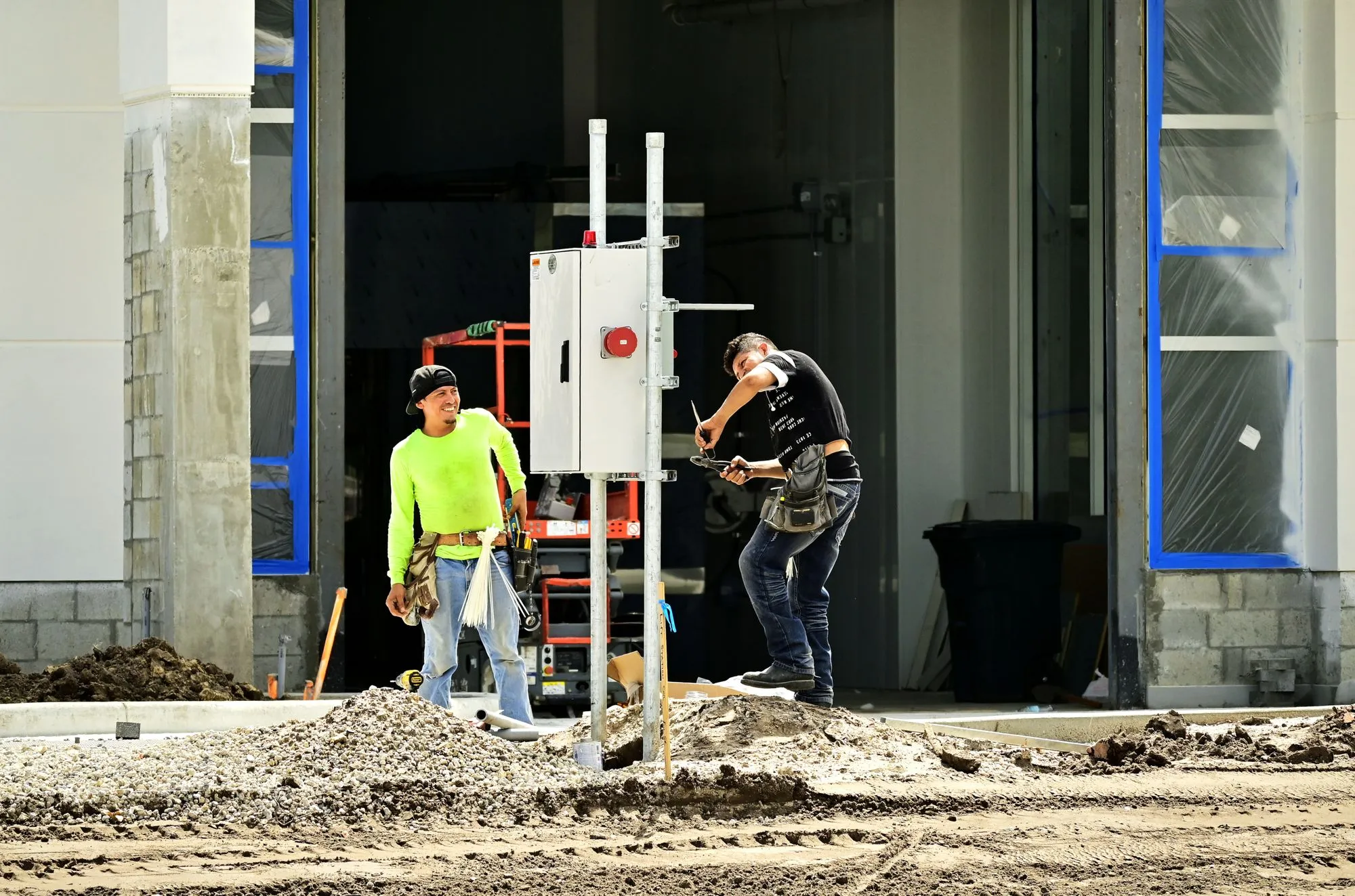
Per-port cost is the total project cost divided by the number of ports. It falls as more ports share the same electrical work, and rises when the first few ports need trenching or an upgrade. Because site conditions vary so much, the free assessment produces the number for your property.
What drives the cost
| Driver | Why it matters | What pushes it up |
|---|---|---|
| Panel and service capacity | Sets how much charging fits before new equipment is needed. | No spare capacity, full panels, a service or transformer upgrade. |
| Distance and trenching | Conduit and wire run from the panel to every charging space. | Long runs, trenching through asphalt or concrete, core drilling in garages. |
| Charger count and type | Each port adds hardware, a circuit share and install labor. | Many Level 2 ports at once; pedestal mounts instead of wall mounts. |
| Load management | Lets more ports share capacity and can avoid an upgrade. | Dynamic systems that need metering at the service. |
| Networking and software | Driver access, billing and remote monitoring. | Per-port subscriptions over a multi-year term; cellular connectivity in garages. |
| Permits, accessibility and utility work | Required reviews and any utility make-ready. | Accessible-space requirements, utility design fees, long review queues. |
Electrical work
Electrical work is often the largest and most variable part. It covers panel or switchgear changes, conduit and wire, and any utility make-ready. Load management can cut it by fitting more ports on existing capacity. See EV load management.
Network and software fees
Networked chargers usually carry a recurring per-port fee for billing, access control and monitoring. Ask for the term, what happens at renewal, and whether you can switch networks without replacing hardware.
Revenue and billing models
- Usage fees: per kWh or per session, set by you, collected by the network.
- Assigned-space fees: a monthly charge for a reserved charging space.
- Resident meter: the circuit is tied to the resident's own meter, so you recover install cost but not energy.
- Amenity: charging is included to support leasing, with costs recovered indirectly.
How to estimate EV charging ROI for multifamily properties
- Take the installed cost from your quote, less any confirmed incentive.
- Estimate yearly revenue: expected sessions or kWh × your price.
- Subtract yearly electricity, network fees and maintenance.
- Divide net installed cost by yearly net revenue for a simple payback.
Utilization is the biggest unknown. Start from current resident demand, not national averages.
How incentives change it
An open program can reduce installed cost or fund make-ready work. Programs open, close and change rules, so treat funding as a separate line until it's confirmed in writing. See California multifamily EV charging incentives.
Condo cost-sharing
Condo communities usually split costs one of three ways: the association funds shared chargers and recovers costs through fees, owners pay for their own installs, or the association funds shared infrastructure and owners add chargers. See condo and HOA EV charging. Apartment owners: see EV charging for apartments.