- Apartments
- Condos and HOAs
- Senior and affordable housing
EV Charging Stations for California Multifamily Properties
We plan EV charging stations for multifamily buildings around the one limit that matters: your electrical service. For California owners, managers and HOA boards, from capacity check to commissioning.
For owners, managers and HOA boards. California properties only.
- Free, no-obligation assessment
- California multifamily only
- Owner, manager and HOA inquiries
- Electrical capacity checked first

Who this is for
- Apartment owners and operatorsA resident has asked for a charger, or you want a plan before the requests pile up.Apartment EV charging
- Condo and HOA boardsOne owner wants a charger at their space, or the board wants a community-wide program.Condo and HOA EV charging
- Affordable and senior housingTight capital budgets, regulatory agreements and residents who may not drive EVs yet.
- Property and asset managersSeveral buildings, one approach to chargers, billing and maintenance.
- 2 or more units
- Garages, carports and surface lots
- Anywhere in California
Choosing EV charging stations for multifamily parking
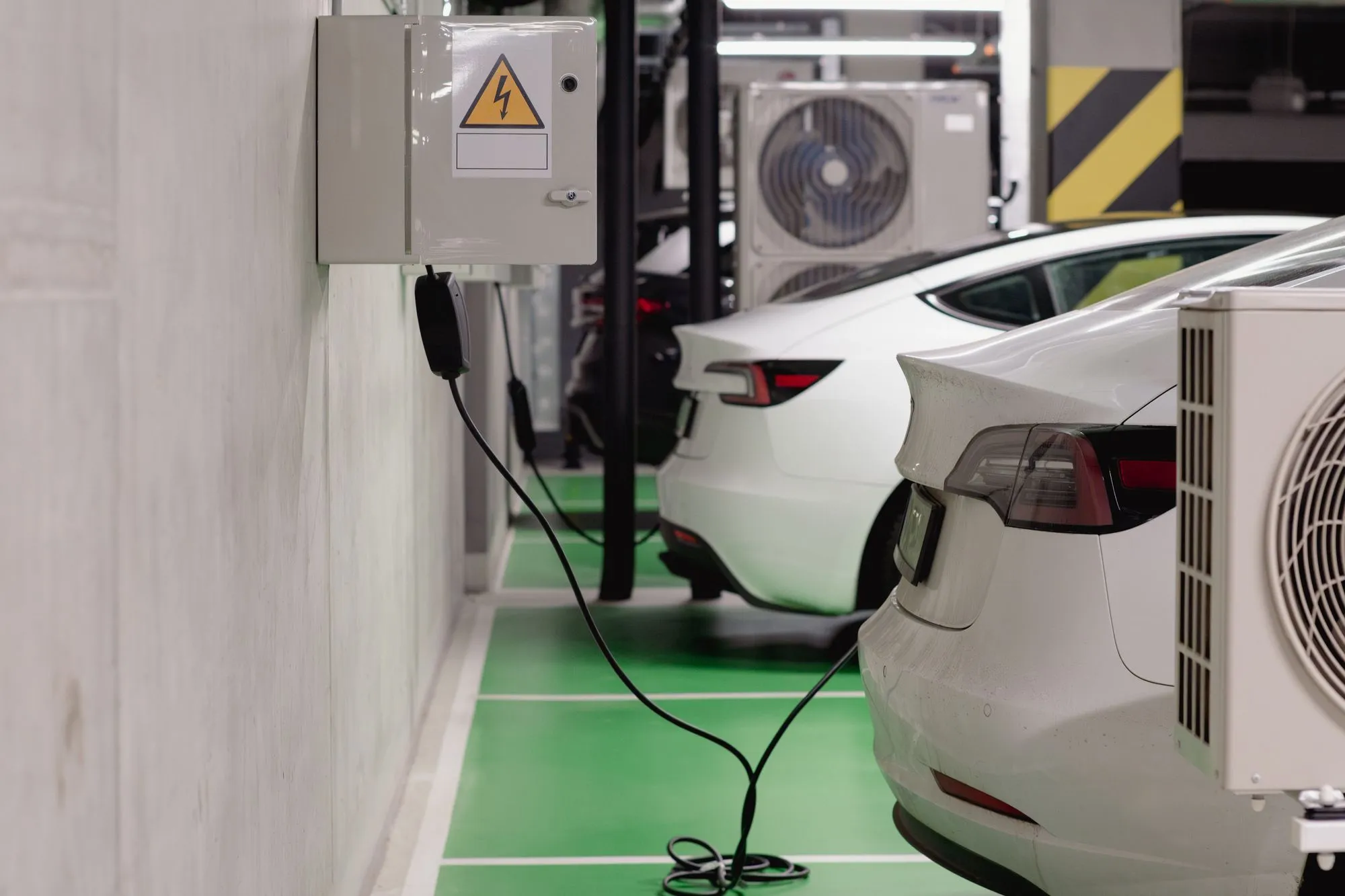
Most apartment and condo buildings use Level 2, Level 1 or a mix, tied together with load management. DC fast charging rarely fits a residential garage.
| Feature | Level 1 smart outlet | Level 2 | DC fast | With load management |
|---|---|---|---|---|
| Supply | 120 V circuit | 208/240 V circuit | Three-phase service, usually 480 V | Applies to Level 1 and Level 2 circuits |
| Power per space | Lowest | Moderate | Highest by far | Shared and capped across ports |
| Fits best | Assigned spaces where cars park overnight | Shared, assigned or turnover spaces | High-turnover public or fleet sites; rare in multifamily | Buildings with limited spare capacity |
| Electrical impact | Small per space | Adds up quickly without a plan | Often needs new service and utility work | Can serve more spaces from the same service |
| Trade-off | Slow charging | Needs capacity planning | Highest equipment and electrical cost | Slower charging at peak times |
Installer, network or charging-as-a-service
Who owns the chargers decides who pays upfront, who bills residents and who fixes a broken port.
Owner-installed
You buy the chargers and pay for the electrical work. You set pricing and keep any usage revenue, and you arrange maintenance.
Network service
You own the hardware. A charging network handles driver access, billing and remote monitoring for a recurring software fee.
Charging-as-a-service
A provider installs and runs the chargers under a contract, often with less upfront cost to you. Read the term, revenue share and removal clauses closely.
How a project runs
Permits and any utility work set the pace, so the schedule comes after the site assessment.
Site assessment
Parking layout, panel schedules, utility bills and the spaces you want to serve.
Electrical capacity
A load calculation shows how much power is spare and whether load management is needed.
Design
Charger count, Level 1 or Level 2, circuit layout, and billing and network choices.
Utility make-ready
Only if the service, meter or transformer has to change. This often sets the schedule.
Permits
Electrical permits from your city or county, plus accessibility review where it applies.
Install and handover
Work is scheduled around parking access, then tested, set up on the network and documented.
Billing and maintenance
Decide how residents pay before you choose hardware. The billing method narrows the charger list.
- Networked billing. Residents pay per session or per kWh through an app or card. You set the price.
- Assigned and metered. A circuit runs to a resident's space and is tied to their meter or a submeter.
- Included or flat fee. Charging is bundled into rent or HOA dues, which is simple but harder to keep fair.
For maintenance, get written response times, a spare-parts plan and a named contact for residents.
California rules to know
General information, not legal advice. Have counsel review any specific request.
Tenant requests
Civil Code §1947.6 covers tenant requests to install a charging station at their parking space.
Apartment owner's guideCondo and HOA requests
Civil Code §4745 covers owner charging stations in common interest developments.
HOA EV charging policyNew construction and alterations
California's green building code, CALGreen, sets EV-ready requirements for new construction and some alterations. Your engineer confirms what applies to your project.
CALGreen at the Building Standards Commission
Cost and incentives
Cost and ROI
What drives the price: spare capacity, trenching, charger count, load management and network fees.
See the cost driversIncentive status
California programs open and close. Check the dated list, then we check your address.
Check current statusLoad management
How buildings add more chargers without a service upgrade, and when an upgrade is still needed.
Read the guide
Who does the work
We are a planning and referral service. We connect property representatives with a qualified California contractor partner. See how referrals work; partner credentials and service coverage require confirmation.
Find out what your building can support
Start with a free, no-obligation assessment of your property: electrical capacity, charger options and current incentive status.
Frequently asked questions
How many EV charging stations does a multifamily property need?
Start from what your electrical service can support, not a percentage of spaces. A load calculation gives the spare capacity. Load management then decides how many ports can share it. Many properties install in phases: a first group of shared chargers, plus conduit for more spaces later.
Can we add EV charging without a utility service upgrade?
Often, yes. It depends on spare capacity and how many ports you want. Load management and Level 1 circuits let a building serve more spaces from the same service. See EV load management.
Level 1 or Level 2 for apartments and condos?
Level 2 suits shared and turnover spaces. Level 1 uses far less power per space and can work at assigned spaces where cars park overnight. Many buildings mix both.
Who maintains the chargers?
That depends on the ownership model. Owner-installed chargers need a maintenance plan you arrange. Network plans usually include remote monitoring. Charging-as-a-service contracts usually include maintenance. Ask for response times in writing.
What does multifamily EV charging cost?
It depends on spare capacity, distance from the panel to the parking, charger count and network fees. The assessment produces the number for your property. See cost and ROI.
Are there incentives right now?
Programs open and close. Check the dated incentive status page, and we check your address during the assessment.
Request a free assessment
The assessment and quote are free and carry no obligation. Tell us about the building and its parking. The assessment starts with what your electrical service can support, then checks which incentive programs are open for your address.